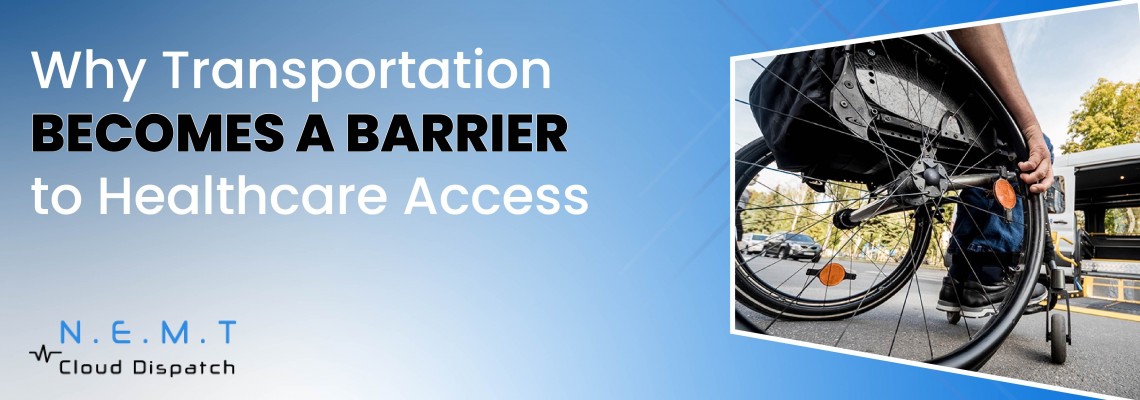
Introduction: A Hidden Barrier to Healthcare Access
Access to healthcare should never depend on whether someone can physically reach a clinic. Yet, for millions of patients, transportation remains a critical barrier. Transportation barriers to healthcare access lead to missed appointments, delayed treatment, and worsening health outcomes.
From the impact of transportation on healthcare access to missed appointments due to lack of transport, the challenges are significant but solvable. At NEMT Cloud Dispatch, we empower healthcare providers and transportation services to overcome these hurdles with advanced scheduling, routing, and fleet management solutions.
What Are Transportation Barriers to Healthcare Access?
Transportation barriers to healthcare access include any obstacle that prevents patients from reaching medical care. These obstacles can be:
Financial: Inability to afford a taxi or rideshare
Physical: Lack of wheelchair-accessible transportation
Geographical: Long distances in rural areas
Schedule-related: Public transit not aligned with appointment times
Real-world healthcare access barriers examples show that even small gaps in transportation can significantly affect patient care. According to a study by the American Hospital Association, addressing these social determinants of health is crucial for improving community well-being.
The Impact of Transportation on Healthcare Access
Transportation doesn’t just affect convenience it directly influences health outcomes. The impact of transportation on healthcare access includes:
Delayed chronic care treatments
Increased emergency room visits
Missed preventive screenings
Greater health disparities in rural communities
For patients living in areas with limited transit, transportation challenges in rural healthcare access are particularly severe. The Rural Health Information Hub highlights transportation as a persistent barrier in these regions. NEMT Cloud Dispatch helps healthcare systems optimize routes and reduce missed trips with our comprehensive fleet management tools, directly improving patient outcomes.
Healthcare Access Barriers Examples
Common healthcare access barriers examples related to transportation include:
Patients without personal vehicles
Lack of accessible public transit for individuals with disabilities
Long travel distances to specialist appointments
High costs of rideshare or taxi services
Poorly coordinated transit schedules
Each scenario highlights a form of transportation barriers to healthcare access that can cause patients to skip appointments and delay essential care. For Medicaid beneficiaries, these barriers are often mitigated through NEMT brokerage services, which coordinate necessary rides.
Transportation Challenges in Rural Healthcare Access
Rural areas face unique struggles:
Clinics and hospitals are far apart
Public transit availability is limited
Travel costs are often higher
These transportation challenges in rural healthcare access result in missed appointments, delayed preventive care, and poorer health outcomes. With public transit and access to medical services limited, patients often face significant obstacles. A report from the National Rural Health Association delves deeper into these systemic issues. NEMT Cloud Dispatch enables rural healthcare providers to reduce missed appointments due to lack of transport with smart scheduling and real-time fleet tracking.
Public Transit and Access to Medical Services
While public transit is essential, it is not always sufficient for medical access. Challenges include:
Limited routes outside city centers
Infrequent schedules
Inaccessibility for people with mobility needs
Addressing public transit and access to medical services gaps is critical. Many transit authorities are exploring innovative solutions, as discussed by the American Public Transportation Association. NEMT Cloud Dispatch integrates real-time transit data with medical transport services to ensure patients never miss essential care. Our dispatch software streamlines this coordination for maximum efficiency.
Missed Appointments Due to Lack of Transport
One of the most immediate consequences of transportation barriers to healthcare access is missed appointments due to lack of transport.
Consequences include:
Increased hospital readmissions
Delayed treatment for chronic illnesses
Wasted resources for providers
Reduced patient satisfaction
The financial impact on the healthcare system is substantial. A study published by the National Institutes of Health (NIH) estimates that millions of Americans miss or delay medical care due to transportation issues. By leveraging NEMT Cloud Dispatch, providers can schedule timely rides, track patient transport, and minimize missed appointments through automated trip scheduling.
How NEMT Cloud Dispatch Solves Transportation Barriers
NEMT Cloud Dispatch transforms how healthcare organizations address transportation barriers to healthcare access:
Smart Routing & Scheduling: Matches transport to appointment times
Fleet Management: Optimizes vehicles and reduces idle time with our comprehensive platform.
Billing & Broker Support: Simplifies administration
Patient Communication: Reminds patients, reducing missed appointments due to lack of transport
With our software, healthcare providers can overcome transportation challenges in rural healthcare access, improve public transit and access to medical services, and address the impact of transportation on healthcare access effectively.
Real-World Examples of Transportation Barriers
Healthcare access barriers examples show the human impact:
Elderly patients in rural areas missing specialist visits
Low-income urban families struggling with transit costs
Disabled patients facing inaccessible public transit
Organizations like the Centers for Medicare & Medicaid Services (CMS) recognize the importance of addressing these social determinants. NEMT Cloud Dispatch has helped hundreds of healthcare providers eliminate these obstacles and improve patient care by offering a reliable and scalable NEMT solution.
Conclusion: Take Action to Remove Barriers
Transportation barriers to healthcare access are solvable with the right technology and planning. By addressing the impact of transportation on healthcare access, tackling healthcare access barriers examples, solving transportation challenges in rural healthcare access, and enhancing public transit and access to medical services, providers can drastically reduce missed appointments due to lack of transport.
NEMT Cloud Dispatch is here to help. With advanced scheduling, routing, and fleet management, we make sure every patient can reach care reliably and on time.
Request a Demo with NEMT Cloud Dispatch today and eliminate transportation barriers for your patients!
Frequently Asked Questions
Obstacles like no personal vehicle, limited public transit, long travel distances, or inaccessible transport that prevent patients from reaching medical care.
Transportation issues can cause missed appointments, delayed treatments, and worsened health outcomes for patients.
Examples include lack of vehicles, poor public transit, high travel costs, long distances, and schedule conflicts with appointments.
Rural areas often have fewer clinics, limited transit options, and longer distances, increasing missed appointments and delayed care.
Missed appointments lead to delayed care, higher emergency visits, increased costs, and lower patient satisfaction.
NEMT Cloud Dispatch provides scheduling, routing, and fleet management tools to ensure patients reach care on time.